Category: Insurance

  • Whole Life Insurance vs Term: Which is the best one?

    Whole Life Insurance vs Term: Which is the best one?

    Life insurance will protect your family and provide financial coverage in the event of your death. It provides money (so-called death benefit) to your people when you die. The money can be used to cover funeral expenses, debts, day-to-day expenses, or the education of children.

    Life insurance in the USA has two major forms: Term Life Insurance and Whole Life Insurance. Each has different features. We will describe both of them in simple language in this guide so you can choose which one is more appropriate for you.

    What Is Term Life Insurance?

    Term life insurance provides coverage for a specified period. This can be:

    10 years

    20 years

    30 years

    In case of your death during the term, your family is given the death benefit. Upon termination, your coverage ceases unless you renew it.

    Pros of Term Life Insurance

    Lower monthly payments

    Straussforward and comprehensible.

    Good for temporary needs

    Cons of Term Life Insurance

    Coverage ends after the term.

    No cash value

    There is a premium increase for renewal.

    Best For:

    Individuals seeking affordable protection for a specific period, such as raising children or paying a mortgage.

    What Is Whole Life Insurance?

    Whole life insurance is a policy that covers your entire life, provided you continue paying the premiums.

    It also entails something known as cash value. This is because a portion of your payment is deposited in a savings account that increases over time.

    Pros of Whole Life Insurance

    Lifetime coverage

    Builds cash value

    Fixed premiums

    Cons of Whole Life Insurance

    Very costly, more than the term.

    More complex

    Less desirable returns than other investments.

    Best For:

    Individuals who desire lifetime cover and will not mind paying more monthly premiums.

    The major distinctions between term and whole life include the following.

    Here is a simple comparison:

    Cost:
    Term life is cheaper. Whole life is more expensive.

    Coverage Length:
    The term can be a certain number of years. Whole life provides you with life-long coverage.

    Cash Value:
    The term has no savings feature. Whole life accumulates cash throughout the lifetime.

    Flexibility:
    The term is simple. Whole life has savings, but it is more complicated.

    Which One Should You Choose?

    The solution will be based on your financial objectives and budget.

    Select The Term Life Insurance when:

    You desire low-cost coverage.

    There are short-term financial obligations.

    You prefer simple insurance.

    Select Whole Life Insurance when:

    You want lifetime coverage.

    You want a cash value feature.

    You can pay more.

    For most young families, term life insurance may be a cheaper and more useful alternative. However, all circumstances are different.

    Final Thoughts

    Life insurance: Both term and whole life insurance offer financial security. Your needs, income, and long-term objectives will determine which is more desirable.

    Before choosing a policy:

    Compare prices

    Know the coverage information.

    Ask questions

    Ensure that the premium fits your bill.

    Life insurance is about protecting those you love. The right type may bring you a calming future.

  • The car insurance premium: How to Reduce It Legally

    The car insurance premium: How to Reduce It Legally

    Car insurance is necessary since it helps you financially in case of an accident. However, at times the monthly payment may be excessive. The positive part is the fact that it is possible to reduce your car insurance premium many times without sacrificing the essential cover.

    Today you will discover easy and secure methods of saving on your motor insurance.

    1. Compare Insurance Quotes

    Comparison of insurance companies is one of the simplest methods of reducing the amount of your premium.

    All companies have their formula of calculating rates. This implies that there can be a significant difference between what one company charges and the other company.

    To save money:

    Get at least 3–5 quotes

    Compare details of cover with caution.

    Ask about discounts

    Hundreds of dollars per year can be saved even by changing a company.

    1. Increase Your Deductible

    Your deductible is the amount you pay and the insurance caters to the rest of the expense following an accident.

    For example:

    Assuming you have a deductible of 500 dollars, you will pay the 500 dollars, and the insurance will cover the remaininge repair expenses.

    Assuming you increase your deductible to $1,000:

    Your monthly premium tends to reduce.

    But do make sure that you have the ability to pay the increased deductible in case anything occurs.

    1. Ask About Discounts

    A large number of drivers are not aware of the number of discounts to be offered.

    Common discounts include:

    Safe driver discount

    Good student discount

    Multi-car discount

    Bundling (home and auto bundling)

    Discount on defensive driving course.

    Low mileage discount

    At all times, enquire of your insurance company what are the discounts available to you.

    1. Improve Your Credit Score

    Insurance companies in most states rely on credit scores to assist them in rate setting.

    An increased credit score may imply:

    Lower insurance premiums

    Better payment terms

    To improve your credit score:

    Pay bills on time

    Lower credit card balances

    Avoid new debt

    Improved credit will help cut up loan and insurance expenses.

    1. Drive Safely

    Your premium significantly depends on your driving record.

    Avoid:

    Speeding tickets

    Traffic violations

    Accidents

    Safety drivers get reduced rates in the long run. There are also safe driving programs in certain companies which monitor your driving behavior and reward good behavior.

    1. Choose Your Car Carefully

    The insurance cost is dependent on the kind of car you drive.

    Those cars that are less expensive to insure:

    Safe, reliable vehicles

    Cars with anti-theft systems

    Cars that are highly rated in terms of safety.

    Cars that cost more to insure:

    Sports cars

    Luxury vehicles

    Repair Skeleton cars which are costly to fix.

    Enquire the cost of insuring a car before purchasing one.

    1. Abort Unnecessary Supply (Where Necessary)

    You might not require full coverage, especially when you are driving an older car.

    For example:

    In case your car is not very valuable.

    And reparation can surpass its worth.

    You may want to take away collision or comprehensive coverage. Be careful, however, before you make this decision.

    Final Thoughts

    Reducing your car insurance does not imply that you are breaking the law or that you are not covered. It implies making intelligent decisions.

    To save money:

    Shop around

    Raise your deductible very slowly.

    Use discounts

    Maintain good credit

    Drive safely

    Even minor adjustments will eventually result in enormous savings. It is always good to review your policy after every year to ensure that you are getting the best rate.

  • Affordable Student Auto Insurance: Money Savings

    Affordable Student Auto Insurance: Money Savings

    Students may find car insurance very costly. Insurance companies usually charge young drivers more due to the lack of driving experience. The good news is that there are numerous ways in which students can save money on auto insurance.

    Why Do Students Pay So Much for Car Insurance?

    Insurance companies consider risk. Younger drivers are perceived as the high-risk category, particularly those under 25, since they are more likely to be involved in accidents.

    Additional factors that influence the student insurance rates include:

    Age

    Driving history

    Type of car

    Location

    Credit score (in some states)

    Although the rates may be high, there are effective ways to reduce them.

    1. Stay on Your Parents’ Policy

    Staying on your parents’ car insurance policy is one of the simplest ways to save on your policy.

    Why this helps:

    A family plan is usually cheaper.

    Multi-car discounts can be used.

    Parents would already possess good driving records.

    When you are a housewife or cannot afford to make a living, this will save you hundreds of dollars per year.

    1. Search for Discounts for Good Students.

    Many insurance companies offer numerous good student discounts.

    You may qualify if:

    You have an average (3.0 GPA) or better.

    You are a full-time student

    You go to school without having a car.

    This cutback will be able to save your premium between 10-25%.

    1. Select a Safe and Low-cost Car.

    It is about the kind of car you are driving.

    Less expensive cars to insure:

    Sedans

    Small SUVs

    Highly safe cars.

    Cars that cost more to insure:

    Sports cars

    Luxury vehicles

    High-performance cars

    When you are a student and purchasing your first car, make it safe and not stylish.

    1. Increase Your Deductible

    Deductible refers to the amount paid prior to insurance taking up damage.

    In case you raise your deductible:

    Your premium level at the end of a month reduces.

    But do not forget to be able to pay more in the case of an accident due to the increased deductible.

    1. Enroll in a Defensive Driving School.

    There are insurance firms that will give you a discount in case you attend a defensive driving course.

    These courses:

    Teach safe driving skills

    Help reduce accidents

    Prove to show insurers that you are responsible.

    The discount does not need to be massive, however, any percentage counts.

    1. Compare Multiple Quotes

    Do not select the first company that comes by.

    Always:

    Compare not less than 3-5 insurance quotes.

    Test big and small insurance companies.

    Inquire on any available discounts.

    The rates may differ significantly among the companies.

    1. Take into consideration Usage-Based Insurance.

    There are companies with programs that follow your driving patterns with the help of an app or a device.

    If you:

    Drive safely

    Avoid hard braking

    Do not speed

    You may receive lower rates.

    It is an excellent choice among responsible drivers among students.

    Final Thoughts

    Student car insurance can be considered very costly, although it can be reduced in numerous ways.

    To save money:

    Hang to the plan of your parents, as much as you can.

    Maintain good grades

    Drive a safe car

    Compare quotes

    Drive carefully

    Better decisions today can make your future driving history and your insurance expenses less expensive.

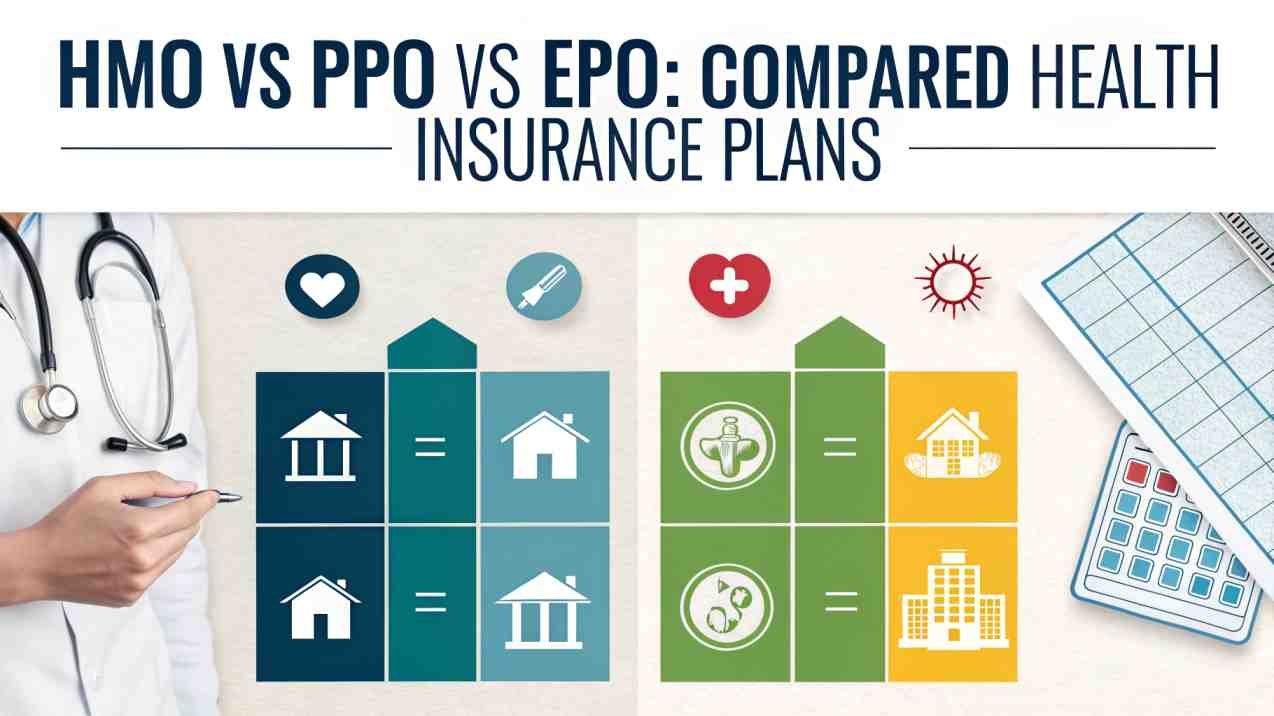
  • HMO vs PPO vs EPO: Compared Health Insurance Plans

    HMO vs PPO vs EPO: Compared Health Insurance Plans

    Choosing a health insurance plan in the USA may be baffling. You might be exposed to abbreviations such as HMO, PPO, and EPO without knowing what they entail. Both types of plans operate differently. There are also cheaper ones that provide limited options. There are also more expensive options that offer more freedom.
    In this guide, we will explain these plans in simple English so you can select the right one.


    What Is Health Insurance?


    Health insurance helps cover medical expenses. This includes:
    Doctor visits
    Hospital stays
    Medicines
    Tests and lab work
    Emergency care
    You normally pay a monthly premium. You could also pay when you visit a doctor:
    A copay (a fixed amount like $25)
    A deductible (money you pay out of pocket before the insurance can cover the expenditure)
    And now we shall see the chief kinds of plans.
    HMO -Health Maintenance Organization.
    Generally, an HMO plan is the least expensive.


    How It Works:


    You need to choose a primary care doctor (PCP).
    Your PCP manages your care.
    To visit a specialist, you must be referred.
    Doctors within the plan’s network must be used (except in emergencies).


    Pros:


    Lower monthly premiums
    Lower out-of-pocket costs
    Good for basic medical needs


    Cons:


    Less flexibility
    Ineligible to see physicians beyond the network.
    Best For:
    The individuals are interested in reduced prices and not particularly concerned with a particular group of physicians.
    PPO -Preferred Provider Organization.
    The PPO plan provides greater freedom.


    How It Works:


    No one needs a referral to a specialist.
    Doctors can be viewed both within and outside the network.
    Care out-of-network is more expensive.


    Pros:


    More flexibility
    No referral needed
    Larger choice of doctors


    Cons:


    Higher monthly premiums
    Higher out-of-pocket costs
    Best For:
    Individuals who desire greater control and choice, though at a higher price.
    EPO- Exclusive Provider Organization.
    EPO is a combination of HMO and PPO.


    How It Works:


    You must apply to the network of doctors.
    You do not need a referral to visit a specialist.
    No out-of-network coverage (except in case of an emergency).


    Pros:


    No referral required
    Lower cost than PPO
    More freedom than HMO


    Cons:


    No out-of-network coverage
    Smaller doctor network
    Best For:
    Individuals desiring an average price and a bit of flexibility.


    How to Choose the Right Plan


    The following questions need to be asked before selecting a plan:

    1. What is my budget?
      HMOs can be the best option if you need the lowest monthly price.
    2. Would I like to be free to select any physician?
      If yes, PPO may be better.
    3. Do I visit specialists often?
      If so, PPO or EPO could be more convenient.
    4. Do I have my doctors within the network?
      This should always be checked before enrolling.
      Final Thoughts
      There is no ideal strategy that fits all.
      HMO = Lower cost, less freedom
      PPO = More freedom, higher cost
      EPO = Middle option
      The optimal health insurance plan is based on your financial capabilities, health requirements, and lifestyle. Compare plans before coming to a decision.
  • The best car insurance companies in the USA (2026 Guide)

    The best car insurance companies in the USA (2026 Guide)

    Selecting the appropriate car insurance firm can save your car and your wallet. In the United States, there are a few insurers that appear to be outstanding in terms of their rates, coverage facilities, customer service and reliability in the year 2026. These are some of the most preferred car insurance companies.

    Best National Car Insurance Companies.

    1. Travelers

    Best Overall Choice
    The low rates, good coverage facilities, and good customer satisfaction will make Travelers one of the best car insurance companies in 2026. The claims handling and digital services are also good aspects the company performs, thus making the insurance process easier.

    Good: Majority of drivers seeking good rates at a good coverage.

    1. GEICO

    Most Apposite to Savings and Discounts.
    GEICO is recognized to be providing some of the lowest average rates in U.S. particularly those with clean records. There is also a lot of discounts that can be used to reduce your premium.

    Good: Drivers will desire low prices and the convenience of the Internet.

    1. Nationwide

    Reliable and Trusted
    Nationwide scores high in terms of trust and customer loyalty. It is also not necessarily the cheapest, but it will provide a stable insurance with a good opportunity among families or long-term policies.

    Good: This is a good product that drivers should use when they need reliability and longevity.

    1. Progressive

    Good Coverage & Options
    Progressive has many different types of insurance as well as additional features such as usage-based insurance (safe drivers can save you money). It has good coverage, but the rates can be a bit more expensive than the low-cost ones.

    Good: Drivers that seek discount programs and flexibility.

    1. Amica

    Great Customer Experience
    Amica usually scores well on customer satisfaction and quality of the service. Perhaps it is a little more expensive than some of the low-cost options, but some consumers like its responsive customer service and claim procedure.

    Good: Drivers who are very concerned with good service and claims support.

    🚗 Other Worthwhile Companies

    1. Auto-Owners Insurance

    Auto-Owners is one of the regional carriers that have good rates and ratings in some of the states.

    1. USAA

    USAA has impossible ratings in terms of coverage and low rates, but it can be granted only to military personnel, veterans, and their relatives.

    1. Lemonade & Root

    They are tech-centered or more modern insurers that provide a car insurance product via digital means and apps to provide car insurance with special features. They can be worth an alternative in case you are a fan of the online tools.

    Brain How to Find the right insurance.

    The following are some of the basic tips prior to selecting an insurer:

    Compare Quotes

    The price might fluctuate significantly depending on your age, driving history, credit and location. Test different quotes to get the best quote.

    Check Coverage Types

    Ensure that you have what you require in the policy, such as liability, collision, comprehensive, and rental reimbursement etc.

    Look at Discounts

    There are a great number of companies that provide discounts on safe driving, good credit, multiple policies, or education certificate of driver.

    Read Customer Reviews

    Service and claims support issue – particularly in the case of post-accident help.